New guide released: integrating advanced chemicals management into the EMAS Framework
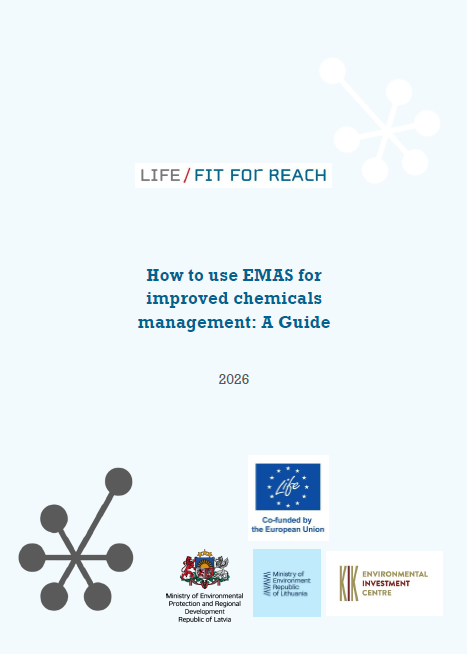
A new comprehensive guide "How to use EMAS for improved chemicals management: A Guide" has been published, offering businesses a systemic roadmap to align their environmental management with the highest standards of chemical safety and transparency.
The guide, produced as part of the LIFE FitforREACH-2 project in cooperation with the EMAS Helpdesk, is now also available on the EMAS website. It serves as a vital tool for organizations looking to go beyond "classical pollutants" and tackle the complex environmental and eco-toxic impacts of the chemicals they use.
 A systemic approach to chemical risks
While many organizations already maintain an Environmental Management System (EMS) under the EMAS (Eco-Management and Audit Scheme), the specific management of hazardous chemicals is often treated as a secondary concern. This new guide aims to change that by proving that EMAS principles - based on the "Plan-Do-Check-Act" (PDCA) cycle - can be successfully applied to the entire life cycle of chemicals.
“Chemicals are used extensively in almost every business activity, from manufacturing to services,” the guide notes. “It is very important to consider their impacts in a broader context and not only during use or disposal, but along the whole supply chain.”
Key features of the guide
The guide provides detailed instructions on how to incorporate chemical management into every stage of the EMAS framework, including:
- Environmental review: how to conduct a thorough inventory of chemicals and identify flow patterns in production.
- Substitution and innovation: guidance on setting environmental objectives that focus on eliminating hazardous substances (such as SVHCs) and finding safer alternatives.
- Legal compliance: a detailed overview of navigating European regulations like REACH, CLP, and the Industrial Emissions Directive (IED).
- Operational control: practical advice on safe storage, handling, and emergency response (e.g., preventing spills and fires).
- Transparency: instructions on how to communicate chemical performance to the public through the EMAS Environmental Statement.
Supporting the Move Toward a Toxic-Free Environment
The guide is primarily intended for "downstream users" of chemicals - including formulators of mixtures, producers of articles, and service providers. It also highlights how new legal requirements, such as the 2024 amendment to the Industrial Emissions Directive, are making the implementation of a Chemicals Management System (CMS) increasingly mandatory for many industrial sectors.
By following this guide, organizations can not only reduce their environmental footprint but also gain a competitive advantage. Improved chemicals management leads to reduced direct costs, better compliance, and a stronger brand image among increasingly health-conscious consumers.