Chemicals in the news: what journalists across project countries write about
As part of the LIFE FitforREACH-2 project, project partners carried out a review of how chemical-related topics are reflected in national media. The analysis covered press reporting in Lithuania, Latvia and Estonia, as well as in Poland, with the aim of identifying common trends, shifts over time and national differences in how chemicals are framed in public discourse.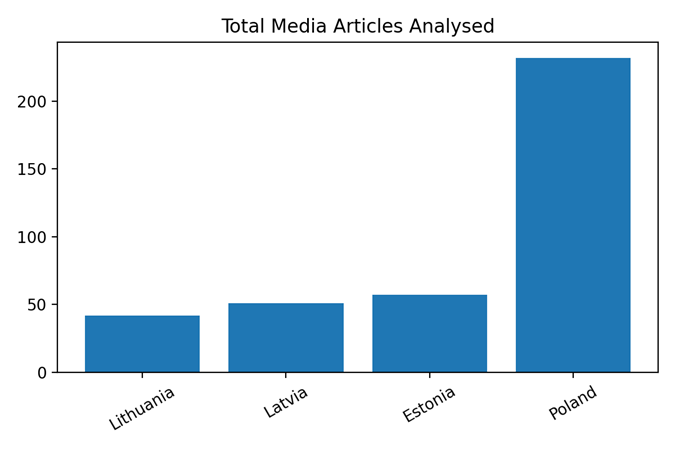
Chemicals have become a well-established topic in national media across Europe, increasingly framed through the lens of everyday life, health and environmental protection. Rather than focusing solely on technical or regulatory aspects, journalists across the FitforREACH-2 project countries increasingly connect chemical substances to products people use, environments they live in and risks they may not immediately recognize.
A comparative analysis of chemical-related media coverage across the project countries highlights shared trends, evolving priorities over time and clear national differences in emphasis.
Shifting focus over time: from regulation to exposure
Media attention initially tended to peak around regulatory developments, such as updates to EU chemicals legislation, new classifications or proposed restrictions. These moments often acted as entry points for broader reporting, with journalists explaining why certain substances were being regulated and what this could mean for industry and consumers.
Over time, coverage increasingly moved beyond legislation alone. In more recent reporting, chemicals are more frequently discussed in the context of everyday exposure, with articles focusing on where hazardous substances can be found in daily life — cosmetics, household products, packaging, furniture or indoor air. This shift reflects a growing effort by journalists to translate complex regulatory or scientific information into relatable stories.
Health and environmental risks as persistent themes
Throughout the analyzed years, health risks and environmental pollution remain central themes across all project countries. Media outlets regularly report on chemicals in water, soil and air, often triggered by new studies, monitoring data or public warnings. Persistent substances, such as PFAS, receive sustained attention and are commonly framed as long-term, difficult-to-control pollutants with consequences for both ecosystems and human health.
Health-related reporting has also become more detailed over time. While earlier articles often focused on general toxicity or contamination, more recent coverage increasingly addresses long-term exposure, cumulative effects and risks to vulnerable groups, reflecting a broader public discussion on prevention and safety.
National perspectives and differences in emphasis
While these overarching trends are visible across all project countries, national media place different emphasis on specific aspects of the chemical debate.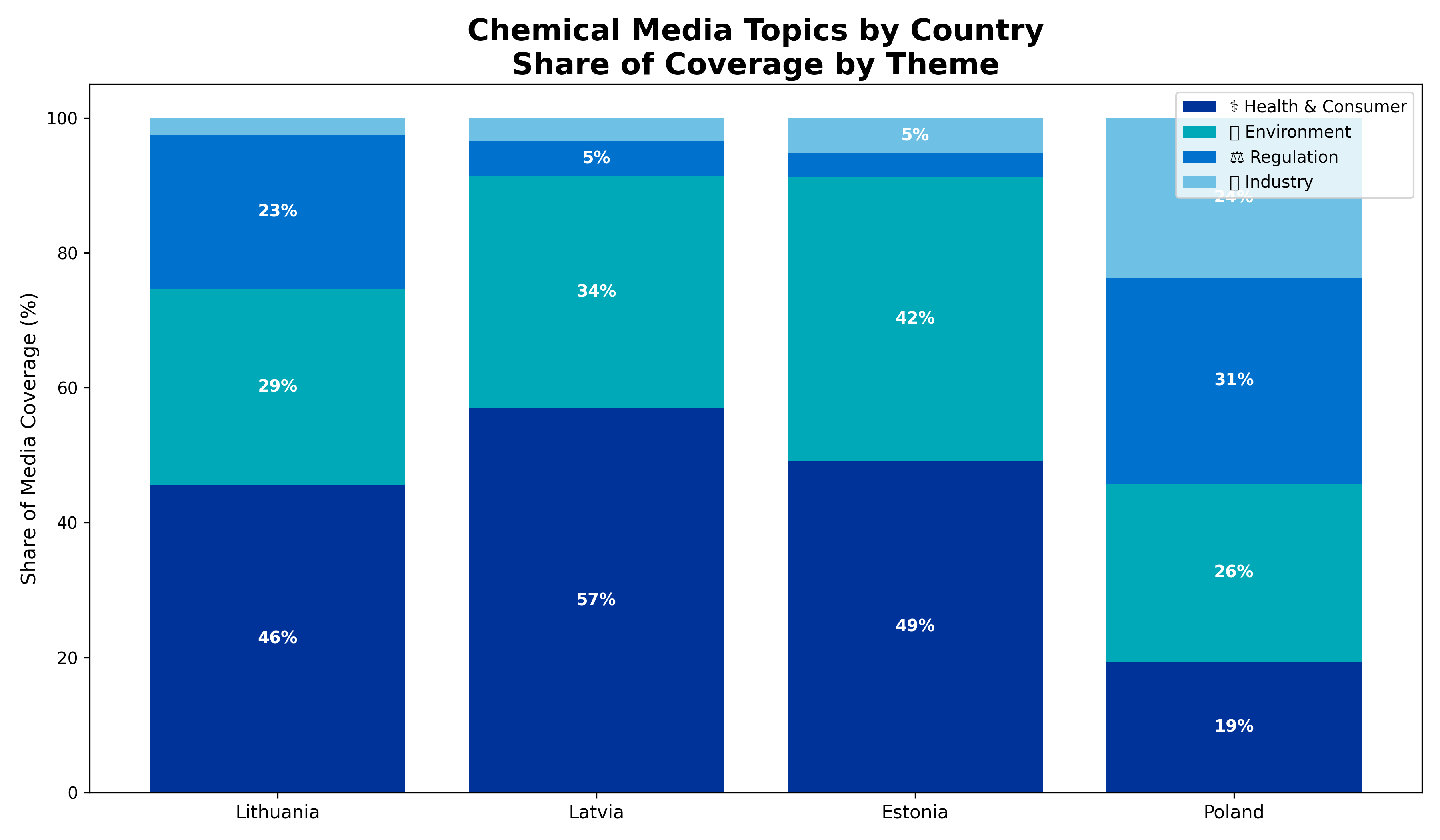
Lithuania
Lithuanian media coverage consistently focuses on chemicals in consumer products and indoor environments. Over time, reporting has moved from general safety warnings toward more detailed discussions of health impacts, including long-term exposure and risks to sensitive groups. Articles often aim to raise consumer awareness and encourage more informed choices.
Latvia
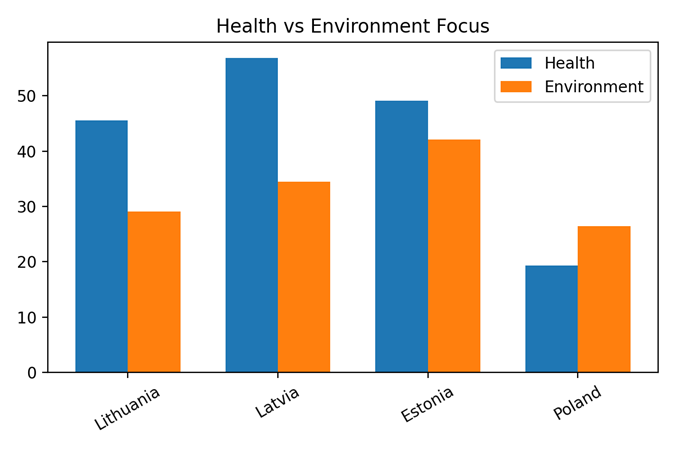
In Latvia, environmental contamination is a dominant theme throughout the analysed years. Media outlets frequently report on chemical pollution of water and ecosystems, with particular attention to PFAS. In more recent coverage, journalists increasingly question the safety of alternative or “green” materials, reflecting a growing debate about sustainability and unintended chemical risks.
Estonia
Estonian media reporting combines consumer safety with workplace exposure and environmental responsibility. Earlier articles often focused on regulatory compliance and occupational safety, while more recent coverage places greater emphasis on the broader societal impacts of chemical risks, including links between environmental protection, health and economic development.
Poland
Polish media coverage shows a strong regulatory and economic dimension across the analyzed period. Articles frequently address EU chemicals policy, enforcement and compliance obligations, often discussing their implications for industry and competitiveness. Alongside this, reporting on environmental pollution and public health has become more prominent in recent years, reflecting rising public concern.
Reactive coverage and limited focus on solutions
Despite increasing attention and more nuanced reporting, media coverage across all countries remains largely reactive. Chemical issues tend to gain visibility in response to regulatory changes, contamination events or public warnings. Preventive approaches — such as early substitution of hazardous substances, safer product design or proactive chemicals risk management — receive comparatively little attention.
This imbalance suggests that while awareness of risks is increasing, the media still underexplores solution-oriented narratives and positive examples of innovation.
A shared agenda with room to evolve
Overall, the analysis shows that chemicals are firmly on the media agenda across project countries, with increasing attention to health and environmental impacts over time. While national media differ in emphasis and framing, a common trend emerges: growing attention to health and environmental impacts over time, alongside a continued lack of solution-oriented reporting. This highlights an opportunity to broaden public discussion toward prevention, innovation and safer chemicals use.