Meeting national authorities to enrich the project success
LIFE FitforREACH-2 implementers are taking care to address national authorities as important stakeholders for the project to provide an input, act as multipliers, support the project activities and help to disseminate results via their channels. In June 2026, we organized third series of round table meetings in Estonia, Latvia and Lithuania to update on the project outputs and insights from work with companies, and to exchange viewpoints with national authorities on the project implementation in countries. As a reflection from discussions, here we highlight some topics of relevance for the common project success.
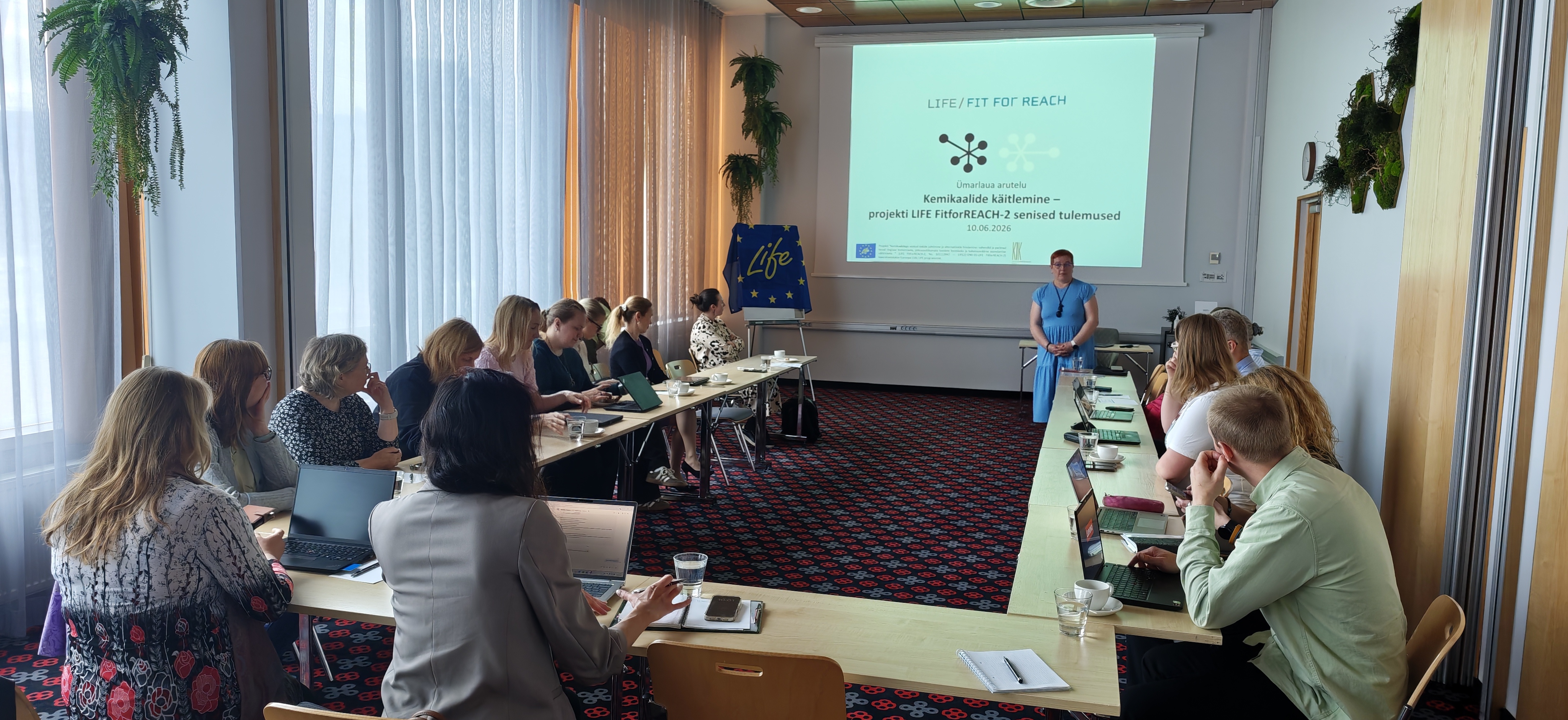
Highlights from the participating partner companies at the meetings have demonstrated the benefits from the project as improved regulatory compliance and sustainability performance. Activities have supported increased knowledge and worker awareness, improvement of chemicals accounting, evaluation of chemical composition, chemicals risk management and substitution work. On the other hand, companies pointed out challenges related to poor quality of safety data sheets and deficient communication practice between controlling institutions and companies. During subsequent discussion there were several suggestions provided by the state authorities on improvement of the communication practice between institutions and companies. On top, companies emphasized the economic viability of substitution and feasibility of innovative technical solutions where the small market size at the single country can hinder developments. Suggestion was made that cooperation with neighbouring countries can create the necessary economies of scale.
The circular economy and aspects regarding hazardous substances in waste is taken up by the project. Gaps in information transfer from manufactures to waste management operators was highlighted as a barrier to efficient waste treatment, material recovery and circular economy objectives. The screening activity to augment the availability of information on substances of concern in waste streams and secondary products is under implementation.
Another important aspect for exchange was on the project effort for acquiring chemical literacy. Training material with the relevance for companies is assembled in 12 tailored modules to the target groups, e.g., industrial companies, universities, business associations, and the media. The state authorities have pointed out the need for information on occupational safety and health for company employees. Various tools to help the companies are developed within the project. It was suggested that focus must be on popularization of these tools for inspectors and companies, as well to professional industry associations.
Acknowledging the gains from exchange with the state authorities the cooperation practice will be maintained with the intention to ensure long-term impact from the project work.